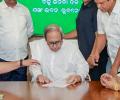
BJD chief Naveen Patnaik has voiced concerns over the Centre's decision to introduce Merchant Discount Rate (MDR) charges on UPI transactions above Rs 2,000 from October 15, urging protection for small traders and common people. This move has sparked a political debate, with the BJP defending the charges as beneficial for digital infrastructure and largely not impacting consumers, while the Congress and traders' associations criticise it as an additional burden.

The Finance Ministry has clarified that the decision to impose a 0.4% Merchant Discount Rate (MDR) on UPI transactions above Rs 2,000 was made independently, refuting claims of foreign influence. The ministry stated the policy aims to build a self-sustaining digital payments ecosystem, with MDR funding infrastructure and supporting small merchants.

A trade body in Jharkhand, FJCCI, has urged the Union Finance Minister to withdraw the proposed 0.4% Merchant Discount Rate (MDR) on UPI transactions above Rs 2,000 for merchants. The body argues that this charge will significantly increase operating costs for businesses, especially MSMEs and retailers, who rely on the current zero-MDR regime for digital payments.

India's proposal to link BRICS payment systems, including central-bank digital currencies (CBDCs), was notably absent from the grouping's New Delhi Declaration, despite being a key agenda item for India's chairmanship. This omission leaves the 16-year effort for trade in local currencies without a settled payment architecture, with the declaration only 'acknowledging' the work of the BRICS Payment Task Force.
The National Payments Corporation of India (NPCI) has deferred the implementation of a 0.4 per cent Merchant Discount Rate (MDR) on Person-to-Merchant UPI transactions above Rs 2,000. Originally set for October 15, the new date will be announced after Diwali, providing relief to users and merchants, especially during the festive season. The decision came amidst opposition concerns about the levy burdening consumers.

The Retailers Association of India (RAI) has voiced concerns that the government's new 0.4 per cent Merchant Discount Rate (MDR) on UPI transactions above Rs 2,000 could reverse the progress of digital payment adoption among small retailers. This fee, effective October 15, places the burden on merchants operating on thin margins, potentially pushing them back to cash transactions and undermining the government's formalisation agenda, especially ahead of the festive season.

The Reserve Bank of India (RBI) has proposed new measures to combat financial fraud in digital payments, including lagged credit for authorised push payments and a 'kill switch' for users to disable all digital transactions.

The Delhi Police's Financial Monitoring Cell prevented potential losses of Rs 1.53 crore in "digital arrest" scams across five states. Their Proactive Victim Identification and Protection Team intervened to save multiple victims, including senior citizens, from transferring additional money to fraudsters who impersonated officials and threatened arrest for fabricated crimes.

The Finance Ministry has clarified that the 0.4 per cent Merchant Discount Rate (MDR) on UPI transactions above Rs 2,000, effective October 15, is not expected to increase cash transactions or cause inflation. The ministry also dismissed allegations of US pressure influencing the decision, asserting that the policy aims to promote RuPay credit cards within the UPI ecosystem, and a monitoring mechanism will ensure the MDR burden is not passed on to consumers.

The SWP will allow members to draw their retirement savings in instalments up to a period of 20 years or 'such period as may be notified' by the central government, instead of a lump-sum withdrawal of the entire accumulated corpus.

The GST Council is set to discuss the application of GST on merchant fees for UPI transactions exceeding Rs 2,000. This comes as a new Merchant Discount Rate (MDR) of 0.4% (capped at Rs 300) is effective from October 15 for such transactions, which, as a service, would typically attract an 18% GST levy. The Council's decision is anticipated to consider consumer interests, with merchants potentially able to claim Input Tax Credit.

A platform that helps retailers reduce failed transactions while keeping the cost down, Innoviti is all set for India's digital payments revolution.

The Congress party has criticised the government's new 0.4% charge on UPI transactions above Rs 2,000 for merchants, terming it a "Modi tax". Opposition leaders, including Rahul Gandhi and Mallikarjun Kharge, allege that this move will ultimately burden consumers through price hikes and accuse the government of succumbing to American pressure to dilute India's zero-MDR policy. The government states the charge will support banks and fintechs.
Fintech giant PhonePe has launched 'PhonePe UPI 123Pay', a new service enabling UPI transactions for feature phone users without requiring an internet connection. This initiative aims to bring digital payment capabilities to over 200 million feature phone users, promoting financial inclusion across India.

The Indian government has introduced a 0.4% fee on UPI transactions above Rs 2,000 for merchants, effective October 15, sparking strong opposition from political parties and traders. Despite accusations of foreign influence and demands for a rollback, the finance ministry and top functionaries have stated there will be no reversal, citing the need for a self-sustaining digital payments ecosystem.

Moving beyond digital payments, the National Payments Corporation of India (NPCI), the operator of Unified Payments Interface, is planning to add more muscle to the country's digital infrastructure by setting up a fourth subsidiary, NPCI Tech Solutions Ltd (NTSL).

An Indian School of Business professor highlights the lack of precise data on losses from free UPI transactions, arguing that the benefits, such as user data generation, are often overlooked in the debate over implementing a Merchant Discount Rate (MDR). A recent ISB survey suggests that charging MDR could lead street vendors to revert to cash, despite the government's allowance for MDR on transactions above Rs 2,000 and NPCI's deferral of its implementation.

The Congress party has criticised the Modi government over a notification regarding UPI transactions, alleging it paves the way for imposing fees, especially on transactions above Rs 2,000. Rahul Gandhi claimed the government is surrendering to American pressure, while Mallikarjun Kharge highlighted the potential burden on common citizens amidst inflation. The government's notification prohibits charges on UPI transactions up to Rs 2,000 but remains silent on higher amounts, sparking fears of a "Digital Payments Tax."

A high-level committee, including representatives from banks and payment associations, is set to decide on Merchant Discount Rate (MDR) for UPI transactions exceeding Rs 2,000 to merchants. While person-to-person and person-to-merchant transactions up to Rs 2,000 remain free, the move follows a recent amendment to the Payment and Settlement Systems Act, sparking debate and clarification from the Finance Minister that only certain high-value merchant transactions might incur charges.

Public shareholders in One 97 Communications (Paytm) have seen approximately 1.7 times returns on their investment over the past five years, driven by the fintech company's rising share price. This growth reflects a substantial increase in public ownership and institutional participation since its market debut, alongside improved financial performance and six consecutive quarters of profitability.
The Congress party has criticised the government's recent notification regarding UPI transactions, alleging it paves the way for users to be charged fees, particularly for transactions above Rs 2,000. The party claims the government lacks transparency and questions if the move is to benefit American firms. The government, however, states that charges are necessary for the system's sustainability and infrastructure upgrades, with the Finance Minister clarifying that Merchant Discount Rate (MDR) applies to merchants, not customers.
The Finance Ministry has refuted allegations that US pressure influenced the decision to levy a 0.4% Merchant Discount Rate (MDR) on select UPI payments. It clarified that NPCI guidelines prioritise RuPay credit cards on UPI to foster a domestic payment ecosystem and that the MDR introduction aims to create a sustainable revenue model for smaller domestic companies, thereby protecting India's sovereignty in digital payments.

Jio Payments Bank introduces UPI-based cash withdrawals at business correspondent touchpoints, enhancing financial inclusion and simplifying access to cash for rural and semi-urban customers.
The Kerala Legislative Assembly has passed a motion urging the central government to completely withdraw the proposed Merchant Discount Rate (MDR) on UPI transactions exceeding Rs 2,000. Chief Minister V D Satheesan and CPI MLA K Rajan highlighted concerns that the MDR would increase business costs, harm small businesses, and reduce the appeal of digital payments, while the BJP argued it would not affect general public or small merchants.

Phishing sites mimicked SBI, ICICI Bank and Axis Bank to steal card details and OTPs.

Merchants will be subject to an 18 per cent Goods and Services Tax (GST) on the Merchant Discount Rate (MDR) for UPI payments exceeding Rs 2,000, but can mitigate this burden by claiming input tax credit (ITC), according to tax experts.
The Indian government has introduced a 0.4% fee on UPI transfers above Rs 2,000 made to merchants, effective October 15, ending nearly six years of free merchant payments. This move led to initial rallies in fintech stocks like Paytm and Mobikwik, though some later pared gains. Person-to-person transactions and small payments remain free for customers, with the fee being a Merchant Discount Rate (MDR).

Congress leader Rahul Gandhi has accused the Modi government of quietly paving the way for imposing fees on UPI transactions, alleging it's a surrender to American pressure. The government's recent notification exempts charges only up to Rs 2,000, sparking concerns that higher value transactions and eventually all UPI payments could incur fees. Finance Minister Nirmala Sitharaman, however, clarified that Merchant Discount Rate (MDR) applies to merchants, not customers, and supports digital infrastructure.

A think tank, GTRI, has urged India to resist US pressure regarding its UPI policies, advocating for competition, policy autonomy, and a sustainable payments ecosystem. This comes as the Lok Sabha passed a bill allowing charges on UPI, and the US has criticised India's digital payment systems, raising concerns about the future of India's digital payment landscape.
Tax experts clarify that merchants will pay 18% GST on Merchant Discount Rate (MDR) for UPI payments exceeding Rs 2,000, effective October 15. However, registered merchants can claim Input Tax Credit (ITC), mitigating the tax burden. This move is expected to generate significant GST revenue for the exchequer while funding payment infrastructure.

The Indian government has introduced a 0.4% transaction fee on UPI payments above Rs 2,000 for merchants, effective October 15, sparking a political row. The Congress party has labelled it a "Modi tax" and accused the government of succumbing to US pressure, while the BJP has defended the move, clarifying that consumers will not be charged and small vendors are protected. The finance ministry reiterated that the charge is on merchants, not customers.
The CPI(M) has strongly opposed the Union government's proposal to levy charges on UPI transactions, calling it a "breach of public trust" and demanding the immediate withdrawal of the legislation. The party highlighted that the government had previously promoted UPI as a free public utility, encouraging widespread adoption, and now seeks to monetise this infrastructure. They also linked this move to a broader trend of increasing banking charges.

N Sundaresha Subramanian digs deeper into what Catalyst, an Indo-US project, brings to the payments ecosystem.
Morgan Stanley has upgraded One 97 Communications Ltd (Paytm) to Overweight, significantly raising its price target to Rs 1,950. This upgrade is driven by expectations of stronger execution in payments and financial services, leading to faster growth and improved profitability. The brokerage anticipates substantial revenue and EBITDA growth, further bolstered by potential changes to the UPI merchant discount rate framework.
The Indian government has introduced a 0.4% Merchant Discount Rate (MDR) on UPI person-to-merchant (P2M) transactions exceeding Rs 2,000, effective October 15. This move ends nearly six years of fully free UPI payments, though person-to-person (P2P) transfers and small P2M payments remain free. The charges aim to bolster investment in UPI infrastructure, with specific exemptions and caps for essential sectors.
A new Merchant Discount Rate (MDR) on UPI transactions above Rs 2,000, effective October 15, could force small merchants and price-sensitive consumers to revert to cash, according to economic think tank GTRI. The move, which introduces a 0.4 per cent MDR with a Rs 300 cap and concessional rates for specific categories, is questioned by GTRI founder Ajay Srivastava, who suggests it's not a revenue issue for the government but potentially a response to US pressure regarding UPI and RuPay's preferential market position.
Unified Payments Interface (UPI) transactions in India reached Rs 29.8 lakh crore in August, approaching record levels. Volume also hit a new high of 24.51 billion transactions, driven by festive activities like Raksha Bandhan. The digital payment system continues its rapid growth, expanding its global presence to 11 countries, with further growth anticipated during the upcoming festive season and new use cases like credit on UPI.
India's Unified Payments Interface (UPI) recorded an unprecedented 24.51 billion transactions valued at Rs 29.8 lakh crore in August, largely propelled by the Raksha Bandhan festival. This surge marks a 22% annual increase in volume and 20% in value, highlighting the expanding reach and depth of the UPI ecosystem. Experts anticipate further growth during the upcoming festive season, while UPI's international acceptance now spans 11 countries.
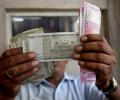
Total payments in the economy grew 24.08 per cent to Rs117.43 trillion in value terms in June, compared to Rs94.64 trillion in May.

Petrol pump dealers seek exemption from the proposed 5 UPI charge on fuel purchases above 2,000, citing pressure on their margins.
